The First Cold Snap: Navigating November Furnace Startups
At Ray's Heating & Air, we know that when the November first freeze arrives, finding reliable home maintenance tips and troubleshooting strategies becomes a top priority for local families. The first major temperature drop of the season often triggers the initial heavy heating cycle for homes across Bucks and Montgomery Counties. After sitting idle through the long, humid summer, your heating system is suddenly asked to perform at full capacity to push back against the sudden chill.
It is incredibly common to turn on the thermostat and immediately notice a sudden burning smell or an unusual rattling sound echoing through your vents. For many, experiencing these symptoms during the initial startup causes immediate anxiety. You might wonder if your home is safe, if a fire hazard is present, or if a major mechanical breakdown is imminent just as the weather turns harsh.
The critical first step is calmly deciding whether to let the system run to "burn off" harmless settled dust, or to shut it down completely for a professional diagnostic. Understanding the difference between normal seasonal symptoms and actual hazards is essential for your household's safety. Sudden temperature drops in late fall require robust, pre-tested HVAC systems, and having a clear action plan reduces the stress of the season. If you are ever unsure about what you are smelling or hearing, exploring professional heating services is always the safest and most reliable route.
Normal Startup Symptoms: The 20-Minute Dust Burn-Off
Most of the time, the concerning odors you notice during the November first freeze are completely harmless. Over the idle summer months, airborne particulate matter naturally settles inside your equipment. When the burners ignite for the first time in over half a year, that accumulation reacts to the sudden heat. In our years of servicing Yardley and the surrounding communities, here is what our technicians tell homeowners to expect during a normal, safe startup process:
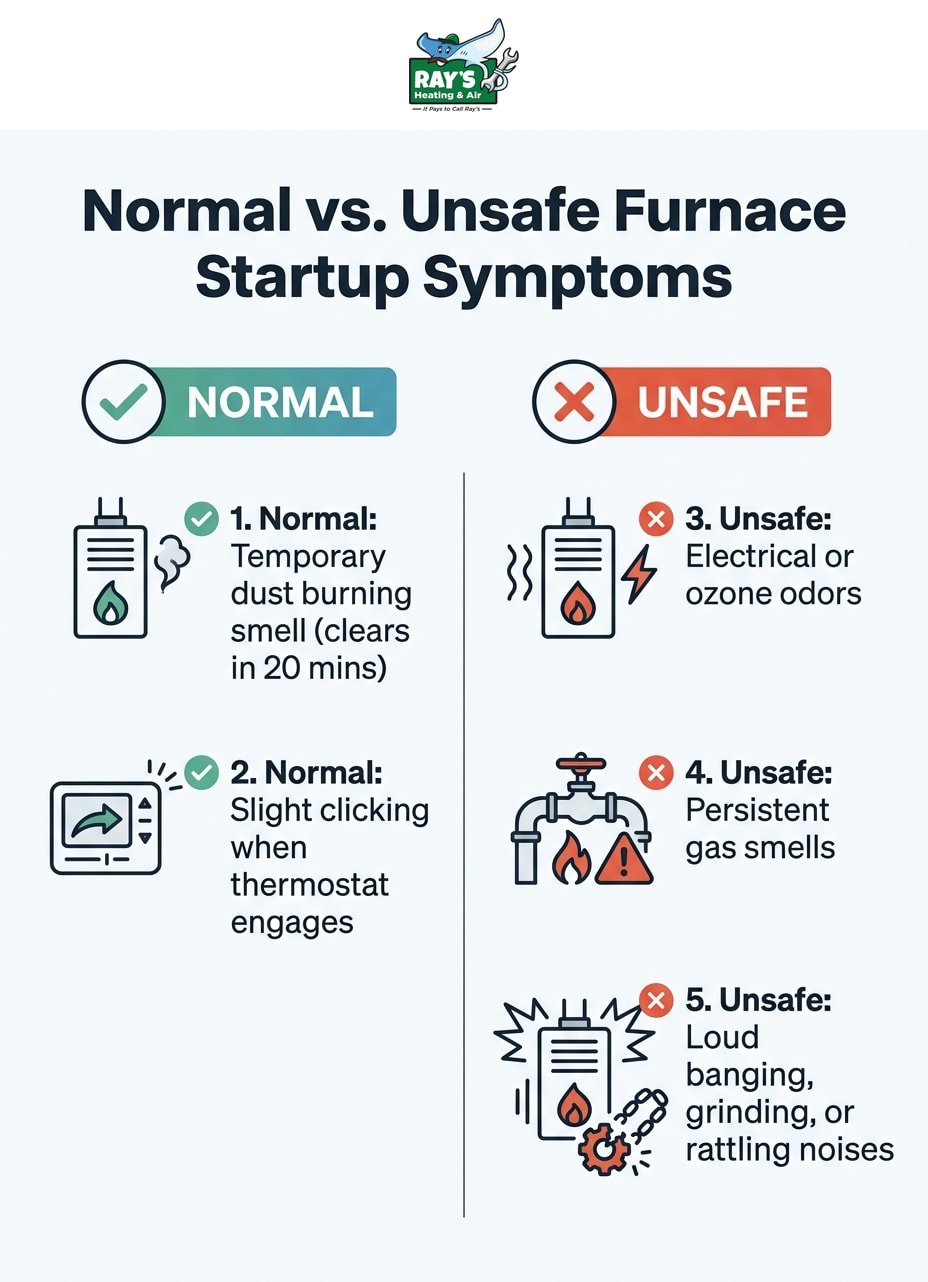
• The initial burning smell: A temporary burning dust smell is the primary cause of concern for most homeowners we speak with, but it is usually a completely harmless burn-off process. This scent is often described as a dry, dusty odor—similar to a hot clothing iron—rather than a harsh electrical or chemical smell.
• The 20-minute rule: This standard odor should dissipate within roughly 20 minutes of continuous runtime. Once the accumulated dust has safely burned away from the heat exchanger and burners, the air coming from your vents should return to smelling clean and neutral.
• Safe ventilation strategies: Opening a few windows to ventilate the home while the system cycles is the recommended approach for this specific, temporary symptom. This simple step allows the brief wave of dusty air to cycle out of your living spaces quickly.
• Minor expansion noises: As cold metal ductwork heats up for the first time in months, you might hear mild ticking or popping sounds. This is normal thermal expansion as the materials react to the temperature change, not a mechanical failure within the unit itself.
Most homeowners don't realize that this brief window of odors and minor sounds is simply the equipment stretching its legs. As long as the symptoms fade quickly, your system is likely operating exactly as designed.
Unsafe Sounds and Smells: When to Shut Down the System
While a brief period of dust burn-off is normal, certain warning signs require immediate action. As a team dedicated to protecting your household across Bucks and Montgomery Counties, we want to empower you with the knowledge to recognize genuine hazards. You do not need to panic, but you do need to act decisively if you encounter the following severe issues.
Electrical burning odors or a sharp ozone smell are never normal. These distinct scents often indicate overheating wires, a failing blower motor, or an active electrical short inside the cabinet. Similarly, a persistent gas scent—which smells strongly of rotten eggs—is an immediate red flag indicating a potential fuel leak.
Beyond odors, pay close attention to the sounds your system makes. Loud rattling, banging, or grinding noises often point to severe mechanical issues. A heavy metallic rattle could mean a cracked heat exchanger, while a harsh grinding sound usually points to failing bearings within the blower assembly.
If any of these severe symptoms occur, the safest action is to turn off the heating system immediately at the thermostat. Do not attempt to push the system through these specific warning signs hoping they will resolve on their own. Instead, leave the unit off and schedule a professional heating and air repair service to thoroughly assess the internal components before the cold weather deepens.
Why You Should Never Attempt Internal Furnace Repairs
Modern heating systems are incredibly advanced pieces of machinery. They rely on complex, precisely calibrated electrical and combustion components to operate safely and efficiently. Because of this complexity, opening the cabinet to investigate a strange noise or smell is never recommended for a homeowner.
Attempting DIY internal repairs poses significant safety risks. A simple mistake with a gas valve, a blower motor wire, or a combustion sensor can lead to dangerous carbon monoxide exposure or create a severe fire hazard. Our technicians at Ray's Heating & Air undergo rigorous training to handle these precise calibrations safely, ensuring that your home remains fully protected.
Understanding Safe Boundaries
To keep your household safe, it is important to know exactly where homeowner maintenance ends and professional service begins.
• Replacing the air filter — Safe for Homeowners?: Yes — Why It Matters: Maintains proper airflow and prevents the system from overheating.
• Testing CO detectors — Safe for Homeowners?: Yes — Why It Matters: Provides the first line of defense against invisible gas leaks.
• Inspecting the heat exchanger — Safe for Homeowners?: No (Requires Professional) — Why It Matters: Microscopic cracks can leak carbon monoxide and require specialized diagnostic tools to detect.
• Adjusting gas valve pressure — Safe for Homeowners?: No (Requires Professional) — Why It Matters: Incorrect pressure can cause dangerous combustion issues or explosive hazards.
Instead of risking internal adjustments, homeowners should focus strictly on external safety and basic upkeep. Testing your carbon monoxide detectors monthly and replacing them every 5 to 7 years is one of the most impactful things you can do for your family. Leaving the internal mechanics to a qualified professional ensures the home remains safe throughout the entire heating season in Bucks and Montgomery Counties.
The Value of a Professional Diagnostic Check
When you shut down your system due to a concerning symptom, the next step is a thorough evaluation. A licensed technician will carefully inspect the heat exchanger for microscopic cracks, test all safety controls, and verify that proper airflow is moving through the system. The primary goal of a diagnostic visit is to determine if a simple adjustment is needed or if a more serious mechanical failure has occurred.
What We Actually Check
At Ray's Heating & Air, a true professional diagnostic goes far beyond a quick visual glance. We perform a comprehensive combustion analysis to ensure fuel is burning cleanly. We test the electrical draw of the blower motor to catch failing bearings before the motor seizes. We also verify that all high-limit safety switches are functioning perfectly, guaranteeing the system will shut itself down if it ever overheats.
We believe in providing an honest, consultative assessment. This means you receive the clear, technical facts about your system's condition without any aggressive pressure. A pattern we see often is homeowners assuming the worst when a simple fix is all that is needed. For example, one local customer reached out over the summer when they had persistent concerns about their furnace's functionality after a brief test run. We responded immediately, assessed the unit top to bottom, and provided an honest evaluation. We confirmed no serious issue existed and no replacement was needed, giving them total confidence long before the November first freeze arrived.
That level of trust is exactly what a professional diagnostic provides. You are never left guessing whether your equipment is safe to operate.
Proactive Steps for Year-Round Comfort and Reliability
Once the initial fall startup is safely completed and any lingering dust has burned away, your focus should shift to ongoing system care. Routine care is the absolute best defense against mid-season breakdowns. In Bucks and Montgomery Counties, where winter weather can be relentless, waiting for a part to fail is a stressful gamble.
Regularly changing your air filters and keeping all return vents clear of furniture and rugs significantly reduces operational strain on the blower motor. Unlike reactive summer cooling fixes—such as a sudden AC repair when a compressor fails under heavy load—proactive winter heating care focuses heavily on combustion safety and sustained, unrestricted airflow. A blocked vent doesn't just make a room cold; it forces the furnace to work harder, increasing wear and tear on every internal component.
The Benefits of Scheduled Care
Enrolling in a structured program ensures that critical seasonal tune-ups are never overlooked. Consistent professional oversight catches minor wear before it becomes a major mechanical failure. A technician can spot a fraying wire or a weakening igniter during a routine visit, replacing it before it leaves you shivering on a Sunday night.
Furthermore, maintaining clean, optimized equipment lowers your energy consumption during the peak usage months. When burners are clean and airflow is unrestricted, the system uses less fuel to heat your home, keeping your monthly utility bills manageable even when the temperature plummets. In some cases, upgrading failing components to high-efficiency models may even qualify you for generally applicable energy rebates or federal tax credits (we always recommend verifying current programs with your utility provider or a tax professional).
Local Expertise for Historic and Modern Homes
In our decades of keeping Bucks and Montgomery Counties warm, we've learned that heating a home in our region requires an understanding of diverse architectural styles. Homes across our service area range from centuries-old historic properties with retrofitted ductwork to modern, tightly sealed new constructions. Each type of building presents unique airflow and heating load challenges.
Older homes often require a tailored approach. Their unique layouts, plaster walls, and older duct systems can restrict airflow, making the system work much harder during severe cold snaps. Understanding how sudden temperature drops affect different types of local architecture allows for much more accurate troubleshooting. A rattling sound in a historic home might simply be a loose register in an older duct run, whereas the same sound in a modern home might point to a blower motor imbalance.
Partnering with a team that knows the community's specific building styles ensures system longevity and consistent comfort. Working with trusted local experts means you get solutions designed for the realities of our regional climate, not generic advice. As one of the top HVAC companies in Yardley, we bring deep, localized experience to every call. We know exactly how our weather impacts your equipment, allowing us to accurately diagnose issues and recommend the right path forward.
Frequently Asked Questions About Fall Furnace Startups
How long is it normal for a heater to smell like burning?
A normal burning dust smell should dissipate within roughly 20 minutes of continuous runtime. This brief window allows the system to safely burn off the particulate matter that settled on the heat exchanger over the summer. If the smell persists beyond an hour, or if it changes from a dusty scent to a harsh electrical odor, shut the system down immediately. Persistent smells indicate a mechanical issue rather than normal seasonal buildup.
Why does my heater smell like burning when I turn it on?
The primary cause is the natural accumulation of household dust, pet dander, and airborne particles on the internal heating components during the idle summer months. When the burners ignite for the first time during the November first freeze, this debris is incinerated by the sudden heat. This process creates a temporary, harmless odor that cycles through your ductwork before fading away.
When should I shut down my furnace and call a professional?
You should shut down your system immediately if you smell electrical burning, ozone, or persistent gas. Additionally, loud mechanical noises like banging, grinding, or heavy rattling require immediate professional attention. Never ignore these severe warning signs, as they often indicate a failing motor, an electrical short, or a compromised heat exchanger that poses a safety risk.
What noises are normal for a furnace during startup?
Normal sounds include a slight clicking when the thermostat engages, the gentle whoosh of air as the blower motor starts, and minor ticking or popping from the ductwork. These sounds are caused by normal thermal expansion as the cold metal heats up. They should be relatively quiet, consistent, and fade quickly, unlike the harsh, disruptive sounds of a true mechanical failure.
How do I safely troubleshoot my heating system?
Safe homeowner troubleshooting is strictly limited to external checks. You can verify that the thermostat is set to "heat," confirm the circuit breaker hasn't tripped, and check that your air filter is clean and unblocked. You should never attempt to open the cabinet to adjust internal electrical or combustion components, as this requires specialized training and diagnostic tools.
Can a dusty furnace cause a fire hazard?
While the initial dust burn-off is a normal and safe process, severe neglect can lead to genuine safety issues. A heavily clogged system with a completely blocked air filter can cause the equipment to overheat, triggering internal safety switches to shut the system down. Regular professional maintenance ensures that dust and debris never reach dangerous levels inside the cabinet.
Making Confident Decisions for Your Home's Comfort: Home Maintenance Tips and Troubleshooting
Understanding the critical difference between normal dust burn-off and mechanical hazards removes the stress from the first fall freeze. When you know what to listen for and what to smell, you can easily distinguish a harmless startup from a situation that requires expert attention. Your household's safety and reliable warmth should always be the top priorities.
If there is ever any doubt about a sound or smell, rely on a professional rather than taking a risk. Reach out to Ray's Heating & Air for a calm, expert assessment to ensure your home is fully prepared for the winter ahead. By investing in a preventative maintenance plan, you guarantee that your system is thoroughly inspected and optimized long before the freezing temperatures arrive. Keep these home maintenance tips and troubleshooting guidelines handy, and enjoy a warm, stress-free season.
Recent Posts