The Shock of Cold Vents on a Freezing November Night
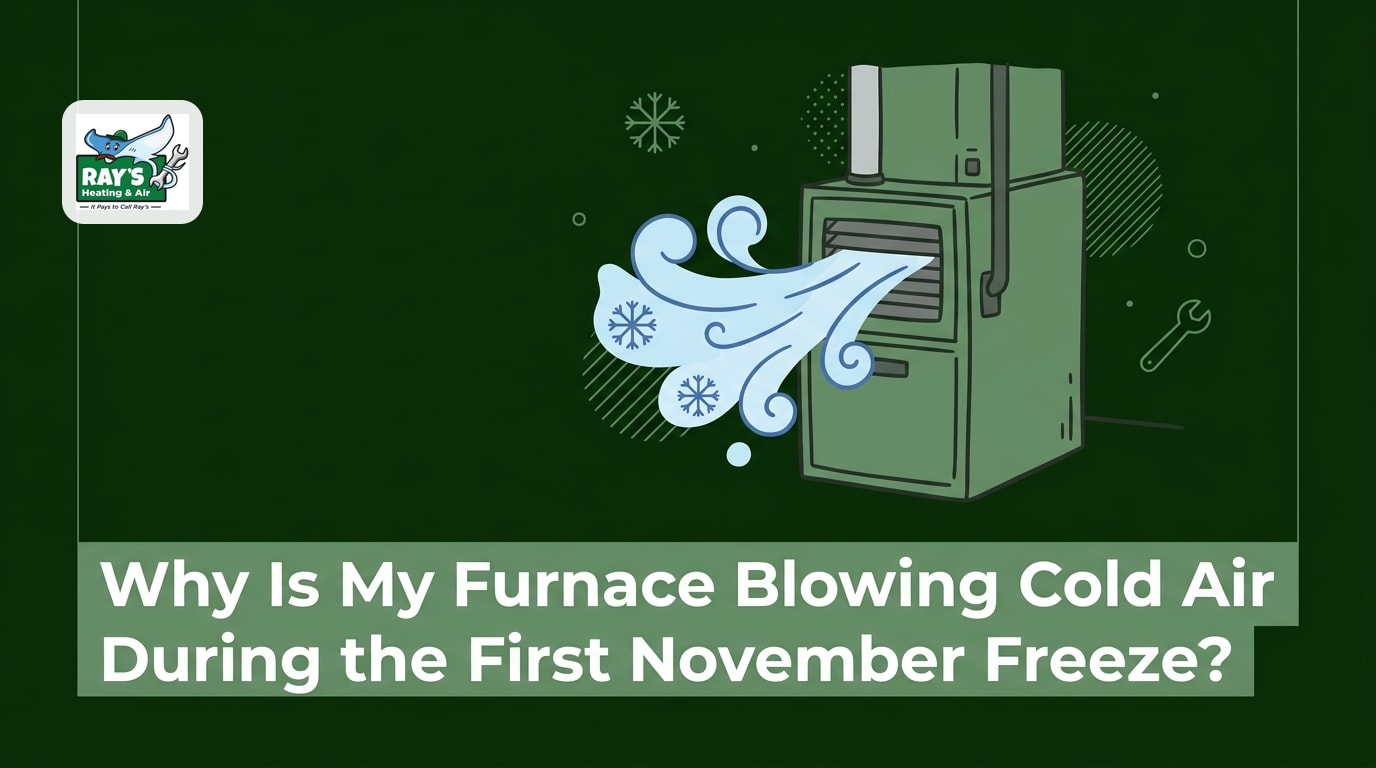
You walk over to the register on one of those first freezing November nights in Yardley, expecting a blast of warmth, but instead, you find your furnace blowing cold air. The temperature outside is dropping into the 30s, your house is rapidly losing heat, and your heating system seems to be doing the exact opposite of its job. Here at Ray's Heating & Air, we regularly hear the frustration from local homeowners who fear they are facing a massive repair bill just as winter begins.
When this happens, your first instinct might be to panic or start pressing every button on the thermostat. However, a furnace that blows unheated air is not necessarily a broken furnace. In many cases, the system is simply responding to a setting error or protecting itself from a deeper issue. The critical decision you have to make right now is figuring out whether this is a simple, safe adjustment you can handle yourself, or a mechanical lockout that requires professional tools to diagnose.
If you need immediate help restoring your comfort safely, explore our heating services or schedule furnace repair in Yardley today.
Before you make that call, there are a few foundational checks every homeowner should know. By understanding how your heating system operates, you can rule out the basic culprits and ensure you are not paying a technician to simply flip a switch or change a filter.
Immediate Safe Homeowner Checks: Thermostats and Breakers
When the team at Ray's Heating & Air fields these calls from homeowners across Bucks and Montgomery Counties, our first step is always to walk them through a few basic, completely safe checks. You do not need any tools for this phase, and you do not need to open the furnace cabinet. Often, the issue comes down to a simple miscommunication between your thermostat, your electrical panel, and your heating equipment.
1. Check the Thermostat Fan Setting
This is the single most common reason a furnace blows cold air. Your thermostat has a switch or setting for the blower fan, usually labeled "ON" and "AUTO."
• The "ON" Setting: If your fan is set to "ON," the furnace blower will run continuously, 24 hours a day, regardless of whether the heating cycle is active. When the burners turn off, the fan keeps pushing room-temperature air through the vents, which feels cold to the touch.
• The "AUTO" Setting: If the fan is set to "AUTO," the blower will only run when the burners are actively heating the air.
Make sure your thermostat fan is set to "AUTO." If someone bumped the thermostat while dusting, or if you left it "ON" to circulate air during the summer, this one-second fix will solve your problem immediately.
2. Verify the Heating Mode and Temperature Setpoint
It sounds obvious, but modern smart thermostats can sometimes switch modes unexpectedly due to schedules, eco-settings, or power blips. Verify that the system mode is explicitly set to "HEAT" and not "COOL" or "OFF." Next, look at the setpoint. The target temperature must be set at least a few degrees higher than the current room temperature to trigger the ignition sequence. If the room is 68 degrees and the thermostat is set to 68 degrees, the furnace will not ignite, but the fan might still cycle if it is in the wrong mode.
3. Inspect the Electrical Panel for Tripped Breakers
Your furnace relies on multiple components to generate heat. In some setups, especially with certain heat pumps or dual-fuel systems, the blower motor and the heating elements might run on different circuits. Even in a standard gas furnace, a minor electrical surge can cause strange behavior.
Walk over to your main electrical panel and look for the breaker labeled "Furnace" or "HVAC." If the switch is resting in the middle position, it has tripped. Firmly push it all the way to the "OFF" position, then push it back to "ON." If the breaker trips again immediately, stop. Do not try to reset it a third time, as this indicates a serious electrical short that requires professional attention.
The Summer-Clogged Filter: A Leading Cause of Cold Air
Our technicians at Ray's Heating & Air notice that here in Bucks and Montgomery Counties, the transition from mild autumn weather to winter happens fast. Systems go from heavy cooling in August directly to heavy heating by those first freezing November nights. If you did not change your air filter at the end of the cooling season, that summer-clogged filter is likely suffocating your furnace right now.
How a Dirty Filter Causes Cold Air
It seems counterintuitive that a blocked filter would cause the air to feel cold. Most people assume a dirty filter just means weaker airflow. However, a clogged filter actually causes your furnace to overheat.
Your furnace generates a massive amount of heat inside its heat exchanger. It relies on a steady, strong flow of cold return air from your house to absorb that heat and carry it into your ductwork. When a dirty filter blocks that incoming air, the heat has nowhere to go. It gets trapped inside the furnace cabinet.
To prevent a fire or a cracked heat exchanger, your furnace is equipped with a safety device called a high-limit switch. When the internal temperature gets too high, this switch trips.
The Furnace's Cooling Sequence
When the high-limit switch trips, the furnace immediately shuts off the gas supply to the burners. The flames go out. However, the system knows that the cabinet is still dangerously hot. To cool itself down, the furnace commands the blower fan to keep running.
Because the burners are off but the fan is running, the system begins blowing unheated, room-temperature air through your vents. To you, standing over the register, it feels like the furnace is blowing cold air. According to data from the U.S. Department of Energy, a dirty or clogged air filter is one of the leading causes of HVAC system failure and safety lockouts.
The Solution
Turn off your furnace at the thermostat. Locate your air filter and pull it out. Hold it up to a light bulb; if you cannot see light shining through the material, it is fully clogged and must be replaced. Put a fresh, clean filter in, and turn the system back on. If the system was overheating, this simple step will restore normal operation. To prevent this from happening in the future, keeping up with routine furnace maintenance before the heating season begins is the best way to ensure reliable airflow.
Safety Lockouts: When the Furnace Shuts Down the Burner
If your thermostat is set correctly and your filter is brand new, but the vents are still blowing cold air, your furnace has likely entered a "safety lockout." A safety lockout is a built-in protective measure. It is the computer board's way of saying, "Something is wrong with the ignition process, and running this system is no longer safe."
When a furnace locks out, it intentionally turns off the gas to prevent a hazard. Just like with an overheating situation, the blower fan may continue to run to purge any remaining gases or heat from the cabinet. There are two primary triggers for a safety lockout that our team at Ray's Heating & Air sees frequently when diagnosing furnaces throughout Yardley.
Dirty Flame Sensors
The flame sensor is a tiny metal rod that sits directly in the path of the burner flames. Its only job is to detect whether a fire has successfully ignited after the gas valve opens. If the gas valve opens but there is no fire, the house could fill with dangerous combustible gas.
Over time, the flame sensor gets coated in a microscopic layer of carbon buildup, dust, and oxidation. When the furnace tries to start, the burners ignite perfectly, but the dirty sensor cannot feel the flame. Believing there is no fire, the sensor immediately shuts the gas valve down. The burners turn off after just a few seconds, but the blower fan keeps running, delivering cold air to your rooms.
Weak or Failing Ignitors
Modern furnaces do not have a standing pilot light. Instead, they use a hot surface ignitor—a small component that glows white-hot, much like the filament in a toaster. When gas hits this glowing element, it ignites.
As ignitors age, they lose their ability to reach the necessary temperature. The furnace will attempt to start, send gas to the ignitor, and fail to light. After a few failed attempts, the system goes into a hard lockout to prevent gas buildup. Ignoring a weak furnace ignitor often leads to total heating failure right when you need it most.
• Air is cold immediately upon startup — What the Furnace is Doing: Blower runs, but burners never ignite — Common Underlying Cause: Failed ignitor or gas valve issue
• Air starts warm, turns cold after a few seconds — What the Furnace is Doing: Burners ignite, then shut off instantly — Common Underlying Cause: Dirty flame sensor failing to read fire
• Air starts warm, turns cold after 10 minutes — What the Furnace is Doing: System overheats and trips limit switch — Common Underlying Cause: Clogged air filter restricting airflow
If your system is in a hard lockout, resetting the power at the breaker might temporarily clear the error code, but it will not fix the underlying mechanical failure. Resetting the furnace repeatedly without addressing the root cause is unsafe and can cause further damage to the control board.
Ductwork Issues: Is It Really the Furnace?
Sometimes, the furnace itself is working perfectly. The burners are lit, the blower is pushing out hot air, and the system is operating exactly as designed. Yet, the air coming out of your bedroom vent still feels surprisingly cold. When this happens, the problem usually lies in the delivery system: your ductwork.
Leaky Ducts in Unconditioned Spaces
In our years of servicing homes across Bucks and Montgomery Counties, our team frequently finds ductwork routed through unconditioned spaces, such as drafty attics, cold crawlspaces, or unfinished basements. The air inside these spaces can easily drop below freezing during the winter.
If your ductwork has cracks, disconnected joints, or degraded insulation, two things happen. First, the expensive, heated air your furnace just created leaks out into the attic. Second, the powerful blower motor creates a vacuum effect, pulling freezing attic air into the ductwork. This freezing air mixes with whatever heated air is left. By the time that air travels all the way to your living room register, it feels lukewarm or completely cold.
Long Duct Runs and Heat Loss
Even if your ducts are perfectly sealed, older homes with very long duct runs can experience significant heat loss. If a vent is located on the far opposite side of the house from the furnace, the heated air has to travel a long distance through cold metal pipes. If those pipes are not properly insulated, the heat radiates away before it ever reaches the room.
How to test this: Check the vents closest to the furnace. If the air coming out of the close vents is hot, but the air coming out of the furthest vents is cold, your furnace is likely functioning fine. You are dealing with a ductwork insulation or leakage issue. If the air is cold at every single vent in the house, the furnace itself is the source of the problem.
Knowing Where DIY Ends and Professional Diagnostics Begin
When you are shivering in your living room, it is tempting to search the internet for quick fixes. You will find countless videos suggesting you open the furnace cabinet, remove the flame sensor, and scrub it with steel wool or sandpaper. We strongly advise against this.
The Dangers of Internet DIY Advice
Once you have checked your thermostat settings, verified the breaker is on, and replaced a dirty air filter, the cabinet door must remain closed. Modern gas furnaces are highly complex pieces of equipment that combine high-voltage electricity with combustible natural gas or propane. They are not designed for DIY tinkering.
Cleaning a flame sensor yourself is incredibly risky. The ceramic base is fragile and easily cracked. The metal rod is sensitive to the oils on your skin. If you use the wrong abrasive material, you can create microscopic grooves that attract even more carbon buildup, causing the sensor to fail again in a matter of weeks. Worse, if you accidentally damage a gas line or cross a wire while working inside the cabinet, you risk creating a severe fire hazard or carbon monoxide leak.
The Value of Expert Diagnostics
This is where professional expertise becomes critical. When a Ray's Heating & Air technician performs a furnace diagnostic, we are not just guessing and swapping out parts. We use specialized tools like multimeters to test the exact microamp draw of the flame sensor. We use manometers to check the precise gas pressure entering the manifold. We use combustion analyzers to ensure the exhaust gases are venting safely.
Working with a dedicated local team means you get expert, reliable diagnostics that safely restore your heat during a sudden emergency breakdown without the guesswork. We pinpoint the exact failure, explain the solution clearly, and ensure your system is safe to operate before we leave. If you have run through the safe homeowner checks and your vents are still blowing cold air, it is time to step back and schedule a professional furnace tune-up or diagnostic visit.

Frequently Asked Questions
Why is my furnace running but blowing cold air?
Your furnace is likely running its blower fan while the burners are shut off. This typically happens if the thermostat fan is set to "ON" instead of "AUTO," or if the system has entered a safety lockout due to an ignition failure. The furnace runs the fan to cool the cabinet down, resulting in unheated air coming from your vents.
Can a dirty filter cause a furnace to blow cold air?
Yes, a clogged filter is a very common cause of cold air. When airflow is restricted, the heat exchanger overheats and trips the high-limit safety switch. This switch shuts off the gas to the burners but leaves the fan running to cool the system, pushing cold air into your home.
How do I reset my furnace safely?
You can safely reset your furnace by turning the system off at the thermostat, waiting a few minutes, and turning it back on. You can also check your main electrical panel and reset a tripped breaker once. If the system immediately trips the breaker again or goes back into a lockout, do not continue resetting it; call a professional.
Why is my heater blowing cold air in my house occasionally?
If the cold air is intermittent, your furnace might be short-cycling. This means the system is starting up, overheating quickly due to poor airflow (like a dirty filter or blocked vents), shutting down the burners, and running the fan to cool off. Once it cools, it tries to start again, creating a cycle of warm and cold air.
What does it mean if my furnace limit switch keeps tripping?
A limit switch that repeatedly trips indicates a severe airflow restriction or a failing switch component. The most common culprit is a severely clogged air filter, but it can also be caused by blocked return vents, crushed ductwork, or a failing blower motor. This requires immediate attention to prevent damage to the heat exchanger.
How long does a typical furnace diagnostic take?
A professional diagnostic usually takes between 30 to 60 minutes. During this time, a technician will test electrical components, measure gas pressure, inspect safety switches, and identify the exact root cause of the failure. Once the issue is pinpointed, they will explain the findings and outline the steps needed to restore your heat.
Stay Warm and Safe This Winter
Dealing with a furnace blowing cold air is stressful, especially when the winter freeze sets in. By checking your thermostat and replacing your filter, you can solve the easiest problems yourself. But when it comes to mechanical lockouts, trust the professionals at Ray's Heating & Air. We are here to provide clear explanations, safe diagnostics, and reliable heat so you can get back to being comfortable in your own home.
Recent Posts