The Late August Heat Meets the Back-to-School Rush
The late August back-to-school weeks are finally here, and as your household transitions into its new routine, you might find yourself wondering why your AC struggles to keep up when the kids return to school in Yardley. During the summer, your home had a steady, predictable rhythm. Now, the house sits empty and quiet for most of the day, only to experience a sudden burst of chaotic activity right as the afternoon temperatures peak.
If you need immediate help optimizing your system, our cooling services can get your home back to a comfortable temperature.
A common pattern our team at Ray's Heating & Air sees during this seasonal transition is a house that feels perfectly fine at noon but becomes uncomfortably warm by 4:00 PM. You walk in the door, look at the thermostat, and realize the air conditioner is running non-stop without making a dent in the indoor temperature. It is incredibly frustrating to feel like your HVAC system is failing right when you need it to provide a relaxing environment after a long day of work and school.
The good news is that this sudden drop in cooling performance is a frequent issue for local families during these late August back-to-school weeks. In many cases, it is not a mechanical failure at all. Instead, it is a behavioral issue caused by a sudden shift in your home's daily routine. The core decision point for homeowners right now is determining if the system actually needs professional attention or if it just requires a strategic schedule adjustment to handle the new afternoon rush.
The Physics of the 3:00 PM Cooling Load Spike
To understand why your air conditioner feels like it is falling behind, you have to look at the science of what HVAC professionals call a "cooling load." Your home's cooling load is the total amount of heat that your air conditioner needs to remove to maintain your desired indoor temperature. This load is not static; it fluctuates based on the outdoor temperature, sunlight hitting your windows, and the level of activity happening inside the house.
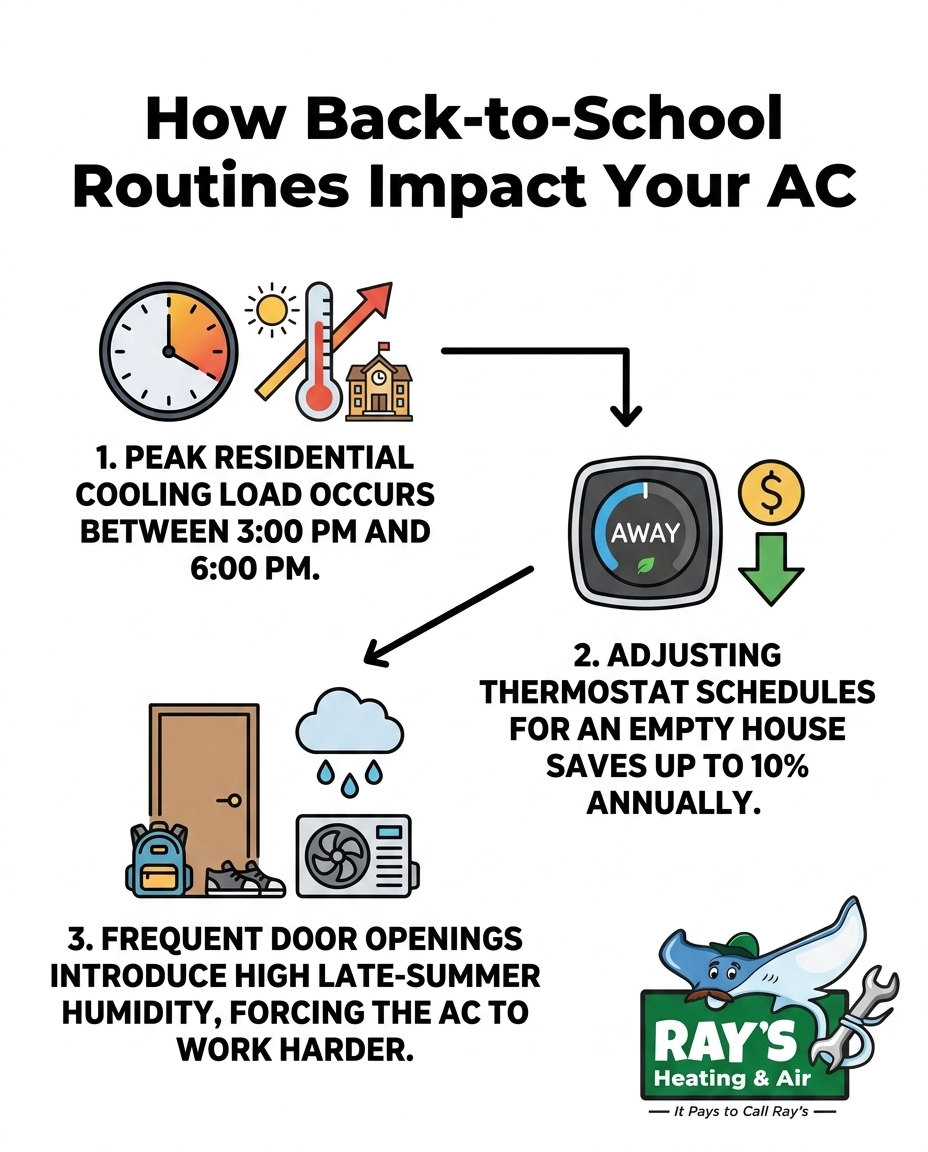
Peak residential cooling demand naturally occurs between 3:00 PM and 6:00 PM. This is when the sun has been beating down on your roof all day, heating up your attic and the structural materials of your home. Having maintained and repaired systems across the Yardley HVAC service area for years, our technicians know firsthand just how intense the late afternoon heat can be. But the outdoor temperature is only half of the equation.
Think about what happens right around 3:00 PM. The house goes from being completely empty to suddenly holding three or four active people. Every person generates body heat. The kids turn on televisions, computers, and gaming consoles. Someone opens the refrigerator to grab a snack. Lights are turned on. The oven or stove might get fired up to start prepping dinner. All of these activities introduce a massive, sudden spike in indoor heat generation.
• 10:00 AM - 2:00 PM — Household Activity Level: Empty house, minimal electronics running — Impact on AC Cooling Load: Low to Moderate (System easily maintains temperature)
• 3:00 PM - 4:00 PM — Household Activity Level: Sudden arrival of 3-4 people, doors opening — Impact on AC Cooling Load: Severe Spike (System must cool sudden heat influx)
• 5:00 PM - 7:00 PM — Household Activity Level: Cooking dinner, electronics on, appliances running — Impact on AC Cooling Load: Sustained High (System runs continuously to catch up)
Your HVAC system, which may have been idling or running on a minimal cycle for hours, is suddenly hit with a massive demand spike. It has to overcome the hottest part of the day outside while simultaneously fighting a surge of heat generated inside. This rapid change in the cooling load is exactly why a perfectly functional air conditioner might take a few hours to catch up.
The Open Door Effect: Humidity and Temperature Clashes
Cooling a home is not just about lowering the air temperature. A significant portion of your air conditioner's job involves removing humidity from the indoor air. In fact, an AC unit must pull the moisture out of the air before it can effectively drop the temperature. When humidity levels are high, the air feels heavier, warmer, and far less comfortable, even if the thermostat reads a cool 72 degrees.
This brings us to one of the biggest challenges of the back-to-school transition: the "open door effect." During the chaotic after-school routine, exterior doors are frequently opened or left completely ajar. Kids run inside to drop off backpacks, head back out to play in the yard, let the dog out, and leave the front door open while talking to a neighbor. Every single time that door opens, a wave of warm, moist air floods into your home.
Yardley's humid continental climate means late summer afternoons see significant spikes in relative humidity, making AC dehumidification critical. When that heavy, humid air rolls into your hallway, our technicians consistently see that your air conditioner has to immediately process it. The system stops focusing on dropping the temperature and works overtime just to wring the new moisture out of the air.
Practical tips for managing afternoon door habits:
• Establish a one-and-done entry rule: Encourage kids to bring everything they need inside on the first trip to minimize door swings.
• Check weatherstripping: Ensure the seals around your main entry doors are tight so you aren't losing conditioned air when the door is actually closed.
• Keep interior doors open: While exterior doors should stay shut, keep the doors to individual bedrooms open to promote even airflow throughout the house.
• Use exhaust fans: If you are cooking an after-school snack, run the stove exhaust fan to pull heat and humidity directly out of the kitchen.
By managing how often the exterior doors open during peak afternoon hours in Yardley PA, you can drastically reduce the sudden influx of humidity, giving your air conditioner a fighting chance to cool the house down faster.
Clashing Schedules: Summer Habits vs. School Year Realities
One of the most common reasons an AC struggles during the late August back-to-school weeks is that the thermostat is still living in mid-July. During summer vacation, there are usually people in the house all day long. Homeowners tend to set their thermostats to a constant, comfortable temperature and leave it there from morning until night. But once the school year starts, that constant-cooling schedule no longer makes sense.
Leaving your AC running at full capacity while the house is empty for eight hours is incredibly inefficient. The U.S. Department of Energy notes that adjusting thermostat schedules for the hours a home is empty can save up to 10% annually on heating and cooling costs. However, if you turn the system completely off or set the temperature too high while you are gone, you create a massive problem for yourself at 3:00 PM.
If the house sits at 80 degrees all day, and you suddenly drop the thermostat to 70 degrees when you walk in the door, the AC has to remove eight hours' worth of accumulated heat from the walls, furniture, and carpets. It will run continuously for hours and still feel like it is falling behind.
The Pre-Cooling Checklist for the School Year:
1. Set the daytime setback: Program your thermostat to sit about 5 to 7 degrees higher than your preferred temperature while the house is empty (e.g., 76 or 78 degrees).
2. Initiate the pre-cool phase: Schedule the thermostat to start dropping the temperature back to your comfort zone about 45 to 60 minutes before the kids arrive home.
3. Target the peak arrival: By 3:00 PM, the house should already be at your ideal temperature (e.g., 72 degrees), allowing the AC to easily handle the sudden burst of body heat and activity.
4. Lock in the evening setting: Maintain that comfortable temperature through the evening hours, then adjust slightly for sleep if desired.
Taking ten minutes to reprogram your smart or programmable thermostat for the new school year is the single most effective behavioral change our experts recommend. It prevents the system from playing a hopeless game of catch-up during the hottest part of the day.
When Behavioral Changes Aren't Enough
If you have updated your thermostat schedule, kept the exterior doors closed, and managed your afternoon humidity, but the house still feels like a sauna at 4:00 PM, you likely have a mechanical issue on your hands. While behavioral adjustments solve a large percentage of late-summer cooling complaints, an AC that runs continuously without lowering the temperature is a major red flag.
By the time late August rolls around in Yardley PA, your air conditioner has been working hard for months. This heavy summer use takes a toll on internal components. One of the most common culprits for a struggling system is a severely clogged air filter. When the filter is packed with dust, pollen, and pet dander from the summer months, it heavily restricts airflow. The system runs longer and harder trying to push air through that barrier, eventually leading to frozen evaporator coils or an overheated compressor.
Other common late-summer mechanical issues include low refrigerant levels due to a slow leak, or a failing capacitor that prevents the outdoor fan from spinning at the correct speed. We strongly advise against any DIY repairs when it comes to internal electrical components or refrigerant lines. Modern HVAC systems operate on high voltage and require specialized, licensed expertise to diagnose safely.
Just last late-summer, our crew at Ray's Heating & Air responded when a local homeowner reached out during a severe heat wave as their heat pump began failing in the afternoon heat. Because they called our dispatch early rather than waiting for a total breakdown, one of our expert technicians arrived quickly, servicing the unit and providing timely, successful repairs to restore cooling before the evening.
Signs It's Time to Call a Professional
• Warm air blowing from the vents: If the thermostat is set to 70 but the air coming from your registers feels lukewarm, the system is not actively cooling.
• Unusual noises or smells: Grinding, squealing, or rattling sounds, as well as musty odors, indicate failing parts or severe moisture buildup.
• Short-cycling: If the system turns on, runs for only two or three minutes, and then shuts off repeatedly, it is struggling to complete a full cooling cycle.
If you notice any of these symptoms, it is time to schedule an AC tune-up before a minor struggle turns into a complete system failure.
Preparing Your System for the Rest of the Season
Even if your air conditioner is handling the back-to-school transition well, late August is the perfect time to perform some basic end-of-summer maintenance. Proactive care is the best way to extend the lifespan of your equipment and ensure it continues to operate efficiently through the warm weeks of early fall.
Actionable End-of-Summer Steps:
• Change the air filter immediately: Make it a habit to swap out your HVAC filter right as the school year begins. Starting the new season with maximum airflow reduces strain on the blower motor.
• Clear the outdoor condenser: Over the summer, grass clippings, overgrown bushes, and early falling leaves can choke the outdoor unit. Trim back any vegetation to ensure at least two feet of clear space around the condenser.
• Check your vents: Walk through the house and make sure no rugs, bookshelves, or heavy curtains have been accidentally pushed over your supply or return registers.
If your unit has been running non-stop since June, scheduling an end-of-season inspection is a smart move. A professional technician can check electrical connections, measure refrigerant charge, and clean the coils to ensure everything is in top shape. When behavioral adjustments don't solve the issue, our rapid response times at Ray's Heating & Air ensure Yardley families aren't left sweating during the chaotic back-to-school transition. Our commitment to prompt, reliable service is why so many locals consider us one of the best HVAC companies in Yardley.
Keep Your Home Comfortable Through the Fall Transition
The transition from lazy summer days to chaotic school routines is stressful enough without having to worry about a hot, uncomfortable house. While back-to-school routines absolutely disrupt your home's natural cooling load, your family shouldn't have to sacrifice comfort just because the schedule changed.
Remember that adjusting your habits—like reprogramming the thermostat for pre-cooling and managing those afternoon door swings—is always the first step. But if you have made those changes and the system is still falling behind in Yardley PA, expert help is just a call away. Don't wait for a total breakdown; reach out for professional AC repair in Yardley to keep your home cool, calm, and comfortable all season long.
Frequently Asked Questions
Why is my AC running constantly in the afternoon?
Your AC runs constantly in the afternoon because it is battling the highest outdoor temperatures of the day while simultaneously dealing with a surge of indoor heat. When kids get home from school, body heat, open doors, and electronics all create a massive, sudden cooling load. The system has to run continuously just to process that rapid influx of heat.
What should I set my thermostat to when kids are at school?
When the house is empty, you should set your thermostat about 5 to 7 degrees higher than your normal comfort level. For example, if you prefer 72 degrees, set it to 77 or 78 degrees during the day. Be sure to program the thermostat to begin cooling the house back down about an hour before the kids actually arrive home.
Why does my house get so hot at 3 PM?
Your house gets hot at 3 PM because the sun has been heating the roof and walls all day, reaching peak intensity. This is combined with the sudden shift from an empty, quiet house to an active household full of people. The sudden use of appliances, lighting, and frequent door openings causes the indoor temperature to spike rapidly.
Does opening the door for just a minute really impact my AC's performance?
Yes, opening the door for even a minute has a major impact because it introduces high humidity into the home. Your air conditioner has to work much harder to remove that heavy moisture from the air before it can effectively lower the temperature. Limiting door swings during the hottest part of the day drastically improves AC efficiency.
How do I know if my AC is struggling due to the heat or actually broken?
You can usually tell it is broken if you have pre-cooled the home, kept the doors closed, and the air coming from the vents still feels warm. If the system is making unusual grinding noises, smells musty, or turns on and off rapidly every few minutes, it is likely suffering from a mechanical failure that requires professional attention.
Recent Posts