


The First Freeze: Why Your Heat Pump Might Look Like It's on Fire
If you just woke up on a freezing November morning to see thick white clouds pouring from your outdoor unit, having the heat pump defrost cycle explained is the fastest way to turn your panic into peace of mind. Your immediate instinct is probably to shut off the thermostat and brace yourself for a massive repair bill. It is a jarring sight, especially during the very first frost of the late fall season when your heating system is working hard to keep your home comfortable.
Before you reach for the breaker panel, take a deep breath. What you are likely seeing is not smoke at all, but completely harmless steam. Your system is simply performing a built-in self-defense routine designed to protect it from ice buildup. In our years of serving Yardley and the surrounding communities, our technicians at Ray's Heating & Air see this exact panic every late fall. Our homeowner-first approach means we want to educate you on how your equipment actually operates in the field. We would much rather save you from an unnecessary emergency dispatch than capitalize on a moment of panic. If you need genuine Heating Services, we are always here, but a steaming heat pump on a cold morning is usually a sign that your system is working exactly as intended.
Heat Pump Defrost Cycle Explained: The Mechanics of Melting Ice
To understand why your outdoor unit is suddenly generating clouds of steam, we have to look at how it operates during the colder months. Heat pumps are incredibly efficient because they do not burn fuel to create heat; instead, they extract ambient heat from the outside air and transfer it inside your home. Even when it feels freezing outside, there is still thermal energy available in the air for the system to harvest.
The Recipe for Frost
As the system pulls heat from the outdoor air, the refrigerant inside the outdoor coils drops to a very low temperature. This naturally causes condensation to form on the metal fins, much like a cold glass of water sweating on a summer day. In our team's experience working on homes throughout Bucks and Montgomery Counties, our specific winter climate creates the perfect recipe for rapid coil icing. We frequently see systems combatting temperatures hovering right around freezing, combined with high ambient humidity. When that humid air meets the freezing-cold coils, the condensation quickly turns into a layer of frost and solid ice.
The System's Self-Defense Mode
Ice is an excellent insulator, which is terrible news for an HVAC system. If the ice gets too thick, it blocks airflow across the coils, preventing the unit from extracting any more heat. To prevent the system from suffocating and breaking down, the control board initiates the defrost cycle.
When the sensors detect a significant drop in coil temperature or airflow, the system temporarily reverses its operation. A mechanical component called the reversing valve shifts, temporarily turning your heat pump into an air conditioner. It takes the hot, pressurized refrigerant from inside your home and pumps it directly into the outdoor coils. This rapid influx of intense heat melts the accumulated ice from the inside out.
Why the Fan Shuts Off
During this process, you will notice that the large fan on top of the outdoor unit completely stops spinning. This is intentional. If the fan kept running, it would blow cold winter air across the coils, cooling them down and fighting against the melting process. By shutting the fan off, the system traps the heat inside the metal housing, allowing the ice to melt much faster and far more efficiently. If you ever need a heating and air repair service in Yardley, a technician will always check to ensure this fan-shutoff mechanism is functioning properly.
Visual and Auditory Clues: How to Spot Normal Defrost Mode
Because the defrost cycle involves a dramatic shift in how the system operates, it produces a very specific set of sights, sounds, and physical changes. Knowing what to look for will help you confidently identify a normal cycle and avoid unnecessary worry.
When your system enters this self-preservation mode, you can expect the following sensory clues:
• Thick white steam: As the hot refrigerant rapidly melts the ice on the freezing coils, the sudden temperature change causes the water to vaporize instantly. This creates a rising cloud of white steam that many homeowners mistake for smoke.
• Stationary fan blades: As mentioned earlier, the top exhaust fan will stop spinning entirely, even though you can still hear the compressor humming loudly inside the cabinet.
• A loud whooshing noise: When the cycle begins, you will likely hear a distinct "whoosh" or a sharp hissing sound. This is simply the reversing valve shifting the flow of pressurized refrigerant. You will hear a similar sound when the cycle ends.
• Cooler air from the vents: Because the system is temporarily running in cooling mode to send heat outside, the vents inside your home may blow cooler air for a few minutes.
• Water pooling: As the ice melts, you will see water draining out from underneath the outdoor unit. This is a sign that the cycle is successfully clearing the coils.
Learning the normal sounds of your HVAC system is a great habit for any homeowner. Just as you might learn about the hidden danger of ignoring a weak furnace ignitor, recognizing the harmless whoosh of a reversing valve makes you a more informed and confident property owner.
Steam vs. Smoke: Knowing the Difference
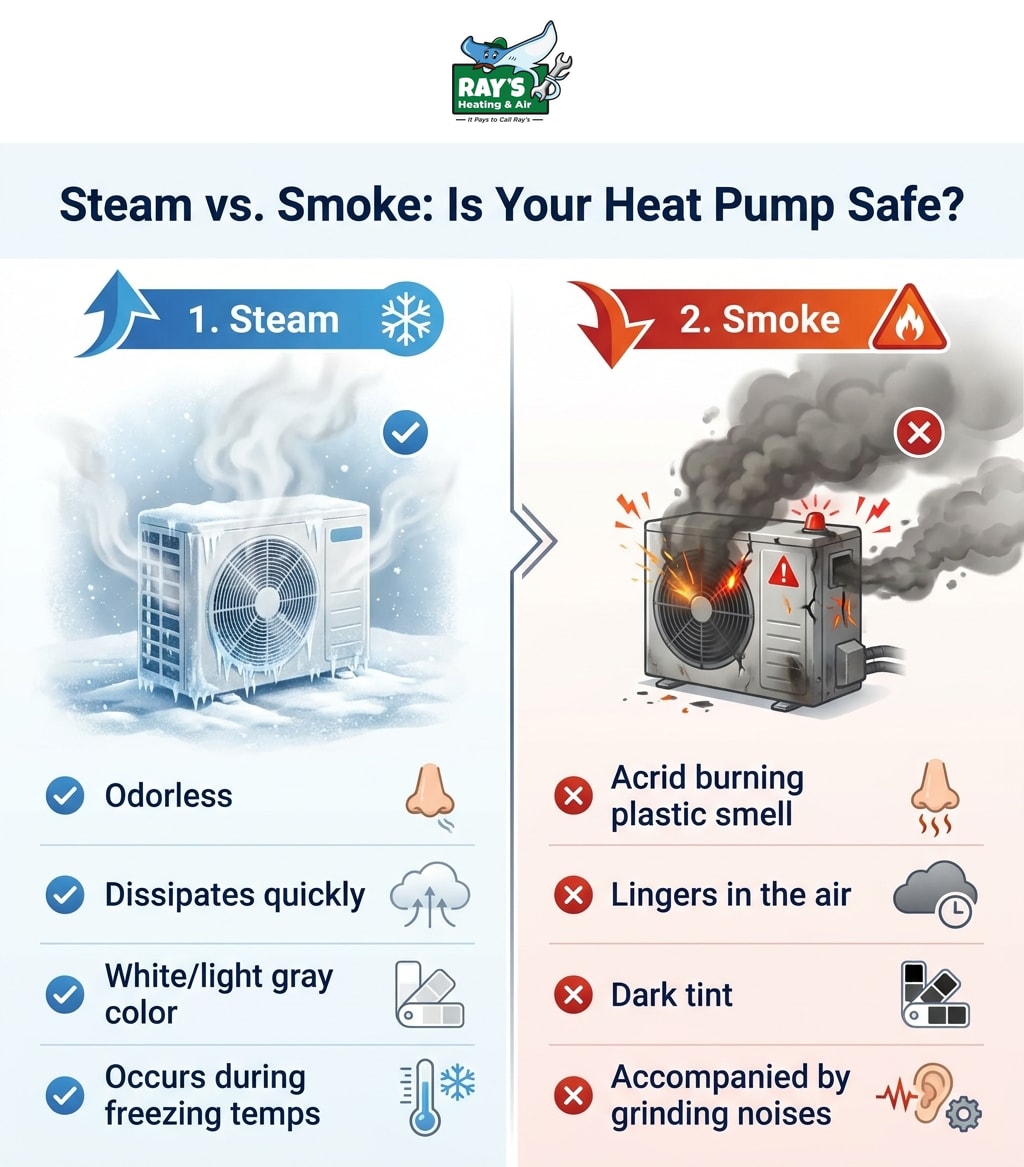
The most critical distinction you need to make on a freezing morning is whether your unit is emitting harmless water vapor or dangerous electrical smoke. While they might look similar from a window thirty feet away, steam and smoke behave very differently up close.
Comparing the Warning Signs
If you are unsure, step outside and observe the unit from a safe distance. Here is a breakdown of what to look for:
• Color and Appearance — Normal Defrost Steam: Pure white or light gray; looks like a cloud. — Dangerous Electrical Smoke: Dark gray, black, or carries a blue/brown tint.
• Behavior in the Air — Normal Defrost Steam: Dissipates rapidly into the surrounding air within seconds. — Dangerous Electrical Smoke: Lingers heavily in the air and drifts slowly across the yard.
• Odor — Normal Defrost Steam: Completely odorless, smelling only like cold winter air. — Dangerous Electrical Smoke: A harsh, acrid smell of burning plastic, ozone, or melting wire insulation.
• Accompanying Sounds — Normal Defrost Steam: A steady compressor hum and a single whooshing noise. — Dangerous Electrical Smoke: Loud screeching, metal-on-metal grinding, or electrical popping/crackling.
• Weather Conditions — Normal Defrost Steam: Occurs when temperatures are near or below freezing. — Dangerous Electrical Smoke: Can happen at any temperature, in any season.
If you smell burning plastic, see dark smoke, or hear aggressive grinding noises, do not wait to see if it stops. Shut the system off immediately at your indoor breaker panel to cut the power. Once the power is safely disconnected, reach out for professional heating repair in Newtown or your surrounding area. However, if you see odorless white clouds rapidly vanishing into the freezing morning air, your system is successfully protecting itself.
Duration and Temperature: What to Expect Inside Your Home
While the outdoor unit is busy melting ice, you might notice some temporary changes inside your home. Setting the right expectations for how long this process takes will help you stay comfortable and avoid touching the thermostat unnecessarily.
The 15-Minute Rule
Most normal defrost cycles are relatively quick. Depending on the severity of the ice buildup and the outdoor temperature, a cycle typically lasts anywhere from 5 to 15 minutes. The system relies on internal sensors to monitor the temperature of the outdoor coils. Once those sensors detect that the metal has warmed up enough to ensure all the ice is melted, the reversing valve shifts back, and normal heating resumes.
Why the Air Feels Cool
As we covered earlier, the system has to operate in cooling mode to send heat outside. This means it is actively pulling heat out of your indoor air. If you stand near a supply vent during this time, you will feel cool air blowing out. This is a normal part of the physics involved, but it can be uncomfortable on a freezing morning.
The Role of Auxiliary Heat
To prevent your home from getting cold during these 5 to 15 minutes, most modern heat pumps are wired to automatically engage their auxiliary heat (often called backup heat strips). These electric resistance coils sit inside your indoor air handler. When the defrost cycle starts, the heat strips turn on to warm up the cool air before it reaches your vents. You might see the "Aux Heat" indicator light up on your thermostat.
The best thing you can do during this time is absolutely nothing. Simply wait 15 minutes. If you try to crank the thermostat up or shut the system down mid-cycle, you interrupt the melting process and force the system to start over later with even thicker ice.
When to Skip the Wait and Call a Professional
While the defrost cycle is a normal, healthy function, there are specific warning signs that indicate the system is struggling and requires professional intervention. Knowing the boundaries of normal operation helps you act quickly when a real problem arises.
The Ice Block Scenario
A light coating of frost or a thin layer of ice is normal. However, if your outdoor unit becomes completely encased in a solid, thick block of ice that resembles a glacier, you have a problem. This usually means the system is failing to trigger the defrost cycle at all. The root cause is often a failing defrost control board, a bad temperature sensor, or a malfunctioning reversing valve. If the ice never melts, the system cannot breathe, and the compressor will eventually overheat and fail.
Continuous Cycling
If your system seems to be stuck in defrost mode, running for 30 to 40 minutes at a time without ever returning to normal heating, it requires attention. This continuous cycling often points to low refrigerant levels. If the system lacks the proper amount of refrigerant, it cannot generate enough heat to effectively melt the ice, causing it to run the cycle endlessly in a futile attempt to clear the coils.
Failing Auxiliary Heat
If your home gets noticeably freezing every time the system defrosts, your auxiliary heat strips may be malfunctioning or suffering from a blown fuse. While the outdoor unit might be melting ice perfectly fine, you should not have to shiver inside your own home while it happens.
Any time you suspect a failing control board, a refrigerant leak, or an electrical issue with your backup heat, a licensed professional is required to safely diagnose and resolve the issue. If you notice these specific symptoms, it is time to schedule Doylestown heating repair.
Frequently Asked Questions About Heat Pump Defrost Cycles
Is it normal for a heat pump to smoke in winter?
No, your system should never actually smoke, but it is completely normal for it to emit thick white steam. This steam occurs when the system melts frost off its outdoor coils, and the sudden temperature change causes the water to vaporize. As long as the vapor is white, odorless, and dissipates quickly, it is just harmless steam.
How do I know if my heat pump is in defrost mode?
You will see the outdoor fan stop spinning, hear a loud shifting "whoosh" noise, and likely see steam rising from the unit. Indoors, your thermostat may indicate that the "Auxiliary Heat" is running. You might also feel slightly cooler air coming from your vents for a few minutes before the backup heat fully engages.
How long should a heat pump defrost cycle last?
A typical cycle lasts anywhere from 5 to 15 minutes. Once the internal sensors detect that the ice has completely melted off the outdoor coils, the reversing valve shifts back, and normal heating resumes. If the cycle runs continuously for more than 30 minutes, you should have the system inspected.
Why is my heat pump blowing cold air during defrost?
To melt outdoor ice, the heat pump briefly reverses its flow, pulling heat from inside your home and sending it outside. This causes cool air to blow indoors temporarily unless your system's backup heat strips activate. Most modern systems will automatically turn on this auxiliary heat to keep you comfortable while the outdoor unit clears itself.
When should I call for heat pump repair?
Call a professional if the unit is entirely encased in solid ice, if the cycle never ends, or if you smell acrid electrical smoke rather than odorless steam. You should also reach out if your home becomes freezing cold during the cycle, which indicates your auxiliary heat strips are failing to activate.
Does the outdoor fan stop spinning during a defrost cycle?
Yes, the outdoor fan intentionally shuts down. This traps the heat around the coils to melt the ice faster and more efficiently. If the fan continued to run, it would blow freezing winter air across the coils, fighting against the system's attempt to warm them up.
Can I pour hot water on my heat pump to melt the ice?
Never pour hot water, chip at the ice with tools, or use a hair dryer on your heat pump. Doing so can severely damage the delicate aluminum fins, cause electrical shorts, or completely void your manufacturer warranty. If the system cannot melt the ice itself, it requires professional mechanical repair, not a manual DIY thaw.
Expert Support for Your Winter Comfort
The short answer is that a steaming heat pump on a frosty morning is usually a sign of a healthy, self-regulating system. By understanding how the defrost cycle works, you can confidently distinguish between normal winter operation and a true mechanical failure. You do not need to panic every time you see a cloud of white vapor rising from your yard.
However, if your system is truly stuck in a solid block of ice, running endlessly without warming your home, or emitting the harsh smell of burning plastic, professional help is just a phone call away. We are here to provide clear answers and reliable solutions so you never have to guess about your family's comfort. Schedule a pre-winter readiness inspection with our team today to ensure your system is fully prepared to handle whatever the winter weather brings, and remember that generic federal tax credits or utility incentive programs may apply if you end up needing a qualifying system replacement.
Recent Posts


