The Seemingly Logical Trap of Shutting Air Registers
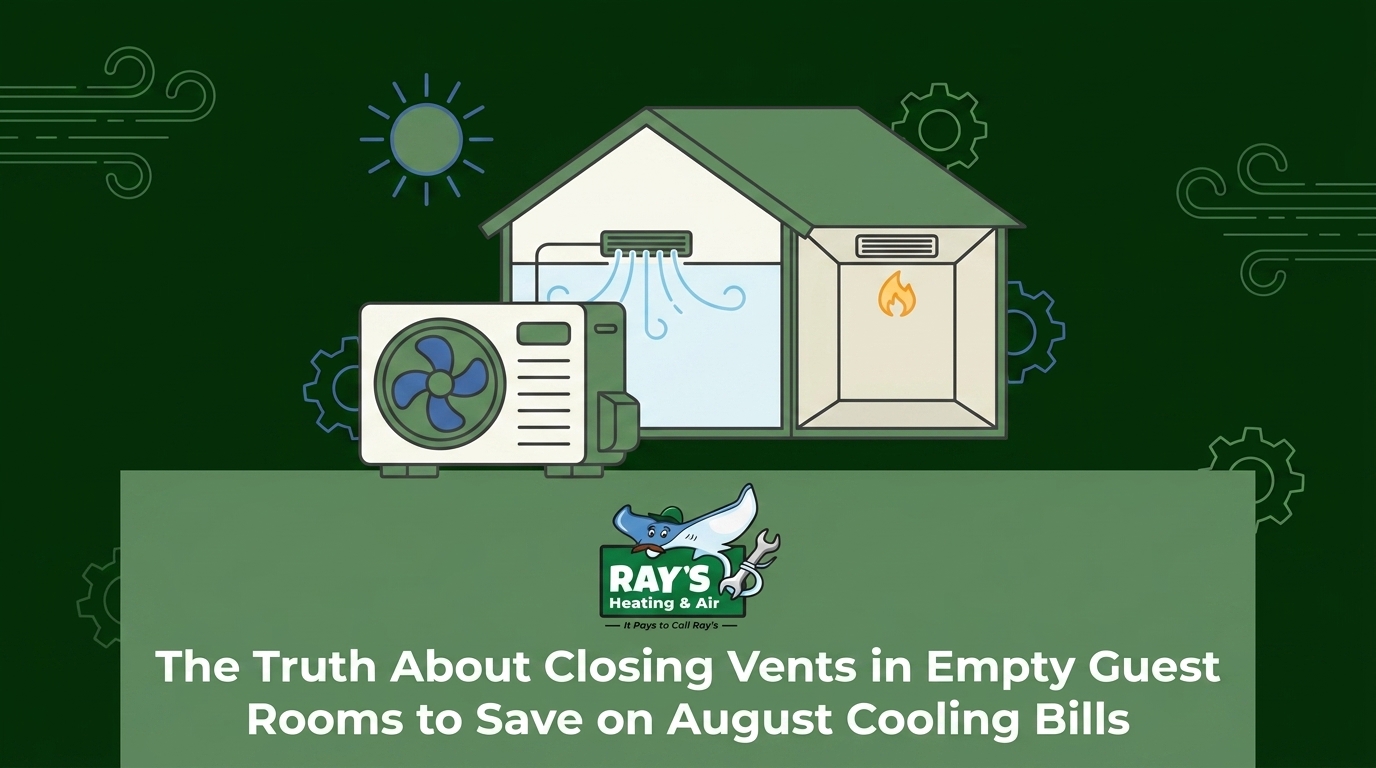
Closing vents in unused rooms doesn't save energy — it actually makes your cooling system work significantly harder. If you are searching for the truth about closing vents in empty guest rooms to save on August cooling bills, you are likely feeling the pinch of late-summer utility costs. During the intense late August heat, it is completely natural to look for ways to cut back on energy consumption. The logic seems flawless at first glance: if nobody is sleeping in the spare bedroom, why should you pay to pump cold air into it?
Looking for professional cooling services or need reliable AC repair in Yardley? We're here to help keep your home comfortable and your system running efficiently.
Unfortunately, modern central air conditioning systems do not operate like light switches. You cannot simply turn off the cooling to one specific room without affecting the rest of the house. Central HVAC systems are designed as closed-loop breathing machines that rely on a very delicate, precisely calculated balance of airflow. When you disrupt that balance by shutting air registers, you trigger a chain reaction of mechanical stress throughout your entire home.
The Flawed Logic of Zonal Cooling Without Zoned Equipment
Many homeowners assume that blocking off a vent simply redirects that cold air to the living room or master bedroom where it is needed most. While a tiny amount of air might be redistributed, the primary result is resistance. Your air conditioner was sized and installed based on the total square footage of your home and the specific number of vents in your ductwork. It expects to push a specific volume of air at all times.
When you close a vent, the system does not power down or generate less cold air. It continues to produce the exact same amount of cooling, but now it has fewer pathways to distribute it. This forces your equipment to fight against its own design, directly countering the savings you originally intended to achieve and setting the stage for costly breakdowns.
Understanding How High Static Pressure Chokes Your System
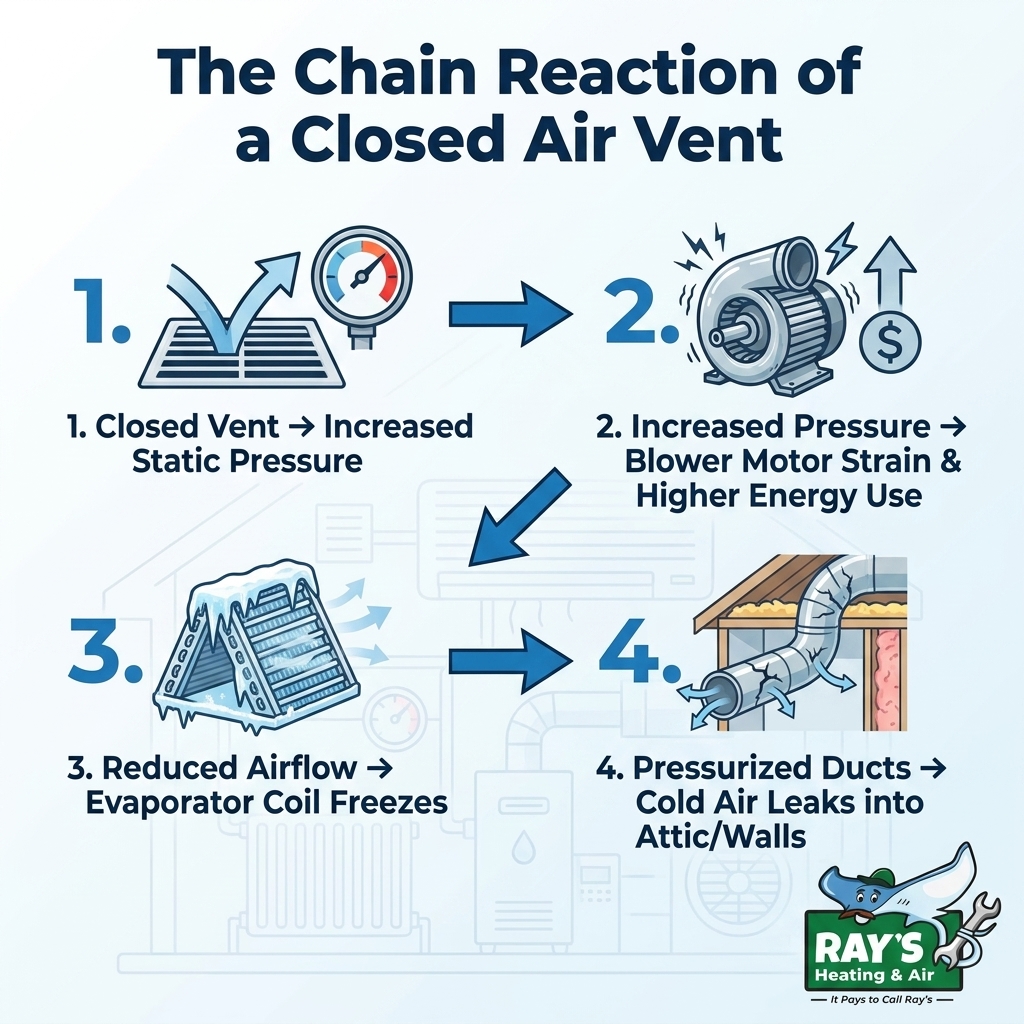
To understand why closing vents is harmful, you have to understand a concept called static pressure. In simple terms, static pressure is the resistance to airflow within your ductwork. Think of your duct system like a human circulatory system, and static pressure as your home's blood pressure. When the pressure gets too high, the heart of the system—your HVAC unit—suffers immense strain.
Your central air system is precisely sized and balanced to push a specific volume of air through a specific number of openings. The engineers who designed the equipment, and the technicians who installed it, calculated exactly how much air needs to return to the unit and how much needs to be supplied to the rooms to keep the pressure balanced.
The Garden Hose Effect
Shutting even one or two guest room vents acts exactly like putting your thumb over the end of a running garden hose. The water does not stop flowing from the spigot; instead, the pressure inside the hose spikes dramatically, and the water that does escape comes out aggressively. In your ductwork, this pressure buildup prevents the system from "breathing" properly. The high static pressure drastically reduces overall cooling efficiency because the system is physically choking on its own conditioned air.
• All Vents Open — Static Pressure Level: Normal / Balanced — Airflow Volume: Optimal — Impact on Equipment: Efficient operation, minimal wear
• 1-2 Vents Closed — Static Pressure Level: Elevated — Airflow Volume: Slightly Restricted — Impact on Equipment: Moderate strain, reduced efficiency
• Multiple Vents Closed — Static Pressure Level: Dangerously High — Airflow Volume: Severely Choked — Impact on Equipment: High risk of motor failure and freezing
When high static pressure takes over, your air conditioner has to run longer cycles just to satisfy the thermostat in the main hallway. Instead of saving energy, the restricted airflow forces the equipment to consume more power, completely defeating the purpose of closing the vents in the first place.
Why Your Blower Motor Works Harder, Not Smarter
The blower motor is the unsung hero of your HVAC system. Its sole job is to pull warm air from your home, push it over the cooling coils, and circulate that newly conditioned air back through the ductwork. When you close vents, you are directly attacking the blower motor's ability to do this efficiently.
Many newer Yardley PA homes are equipped with modern HVAC systems that use variable-speed blower motors. These advanced motors are designed to be highly energy-efficient by adjusting their speed based on the airflow needs of the house. However, they are also programmed to overcome resistance. When a variable-speed motor senses high static pressure from closed vents, its internal computer tells it to ramp up power to push through the blockage.
The Hidden Cost of Motor Strain
As the motor spins faster and works harder to overcome the restricted vents, it consumes significantly more electricity. You might think you are saving energy by isolating a room, but your blower motor is actively pulling more power from the grid just to survive the pressure. This continuous, grinding strain generates excess heat within the motor itself.
If this goes on for too long, the motor will simply burn out. One local homeowner experienced this exact type of catastrophic failure during a 100-degree heat wave; their older heat pump system completely broke down under the immense strain and required an emergency replacement to restore comfort. Our local expertise focuses on diagnosing this hidden blower motor strain during routine maintenance before it turns into a total failure during the hottest weeks of the year.
To keep your system running smoothly and catch these pressure issues early, scheduling a comprehensive AC tune-up is the best defense against mid-summer breakdowns.
The Hidden Danger of Frozen Evaporator Coils
One of the most surprising consequences of closing vents is that it can literally turn your air conditioner into a block of ice. Your indoor unit houses the evaporator coil, a critical component filled with super-chilled refrigerant. This coil's job is to absorb heat from the air inside your home. To function properly, it relies on a constant, steady flow of warm return air blowing across it to keep it from getting too cold.
When you close vents and choke off the system's airflow, the volume of warm air passing over that coil drops dramatically. Without enough heat to absorb, the temperature of the refrigerant coil plummets below freezing. This is where the late August heat and weather patterns become a major problem.
How Summer Humidity Accelerates Freezing
August in Pennsylvania brings oppressive, high humidity. This means the air inside your home carries significantly more moisture than it does in cooler months. As this heavy, moisture-laden air hits the super-cooled evaporator coil, the excess condensation rapidly freezes into solid ice.
• Blocked airflow: The ice builds up between the delicate fins of the coil, eventually forming a solid wall that blocks all air from passing through.
• Warm air from vents: You will notice the system running constantly, but only warm air—or no air at all—coming out of your registers.
• Water damage: When the system is finally turned off, that massive block of ice melts rapidly, often overflowing the drain pan and causing ceiling or floor damage.
Beyond the mess, a frozen coil can cause liquid refrigerant to flow backward down the refrigerant lines. If this liquid hits the outdoor compressor, it can destroy the most expensive component of your entire system. Maintaining proper airflow is just as much about protecting your equipment as it is about managing your indoor air quality and comfort.
Duct Leaks and Wasted Cold Air
Even in the most meticulously built homes, residential ductwork is rarely one hundred percent airtight. Standard metal or flexible ducts often contain tiny micro-leaks at the seams, joints, and connections. Under normal operating conditions with balanced static pressure, the amount of air lost through these tiny gaps is negligible.
However, when you close vents in an empty guest room, you artificially inflate the static pressure inside those ducts. This elevated pressure acts as a powerful amplifier for every single tiny leak in the system. The cold air you paid to condition is now desperately looking for a way out of the pressurized ductwork, and it will force its way through any available crack or poorly sealed joint.
Cooling the Attic by Mistake
Instead of flowing smoothly into your living room or kitchen, a significant portion of your conditioned air is violently pushed out of the ductwork before it ever reaches a living space. Because ductwork is typically routed through unconditioned areas of the home, this means you are inadvertently cooling your attic, your basement, or your crawlspace.
This unintended waste completely negates any perceived savings from closing the guest room vent. You are still paying the utility company to cool the air, but that air is now being wasted on the spiders in the attic rather than keeping your family comfortable. Leaving the vents open ensures the air takes the path of least resistance directly into your living spaces, right where it belongs.
Effective Alternatives to Reduce Summer Cooling Costs
If closing vents is off the table, how can you actually lower your energy bills during the peak heat of summer? There are several highly effective, safe alternatives that will help you save money without putting your HVAC system at risk. When a system issue is diagnosed quickly and accurately, you get straightforward solutions—just as one customer found when their struggling system was quickly evaluated and returned to running efficiently with honest adjustments rather than restrictive vent closures.
Here are the best ways to manage your cooling costs safely in Yardley PA homes:
1. Keep supply registers at least 80% open: If you absolutely must adjust a vent because a room is drafty, never close it completely. Leave the louvers at least 80 percent open. This allows enough air to escape to maintain proper system balance and prevent static pressure spikes.
2. Utilize thermal window treatments: The sun beating down on a guest room window creates massive heat gain. Install blackout curtains, thermal blinds, or solar shades in sun-facing rooms. Blocking the heat from entering the room in the first place reduces the overall cooling load on your entire house.
3. Optimize your ceiling fans: Ceiling fans do not lower the temperature of a room, but they do cool the people in it by creating a wind-chill effect on your skin. Running a ceiling fan allows you to set your thermostat a few degrees higher without sacrificing your personal comfort.
4. Upgrade to a smart thermostat: A smart thermostat can learn your schedule and automatically reduce cooling efforts when you are away from home. Finding the best thermostat settings during a heat wave is far more effective for energy savings than suffocating your ductwork.
5. Consider a zoned HVAC system: If you truly want room-by-room temperature control, talk to a professional about installing a ductless mini-split system or retrofitting your current ductwork with automated zone dampers. These systems are specifically engineered to handle isolated cooling without damaging the equipment.
Keep the Air Flowing for a Cooler, Healthier System
The bottom line is that open vents equate to a balanced, efficient, and long-lasting cooling system. Attempting to save energy by choking off airflow is a myth that ultimately leads to higher electricity bills, poor performance, and expensive mid-summer repairs. The high static pressure created by a closed vent simply isn't worth the risk to your blower motor or your evaporator coil.
Take a few minutes today to walk through your home and check every single room. Make sure no furniture, rugs, or curtains are blocking your registers, and ensure all the vent louvers are fully open. By understanding the truth about closing vents in empty guest rooms to save on August cooling bills, you can protect your investment. If your system is already showing signs of strain, making strange noises, or failing to keep up with the heat, reach out to a professional to get your airflow tested and your comfort restored.
Frequently Asked Questions
Does closing vents save money on AC?
No, closing vents does not save money on your air conditioning bills. It actually increases the static pressure inside your ductwork, which forces your blower motor to work much harder and consume more electricity to push the air through the system.
What happens if you close too many AC vents?
Closing too many vents severely restricts the airflow your system needs to function properly. This extreme pressure can lead to a burnt-out blower motor, increased duct leakage, and an overworked compressor that struggles to cool the rest of the house.
Can closed vents cause an AC to freeze?
Yes, closed vents are a primary cause of frozen evaporator coils. When airflow is restricted, there isn't enough warm return air blowing over the indoor coil, causing the refrigerant temperature to drop and freezing the surrounding condensation into a solid block of ice.
Why shouldn't you close vents in unused rooms?
You shouldn't close vents because central air systems are balanced to push a specific volume of air throughout the entire home. Disrupting this balance causes mechanical strain, reduces overall energy efficiency, and forces cold air out through tiny leaks in your ductwork.
Does closing vents redirect air to other rooms?
While a very small amount of air might be pushed to other open vents, the vast majority of the redirected air simply creates resistance. The system cannot efficiently push the excess air through the remaining vents, leading to pressure buildup rather than better cooling in the living room.
How many air vents can I safely close in my house?
As a general rule, you should never fully close any air vents in your home. If you must adjust airflow in a particularly drafty room, leave the vent at least 80 percent open to ensure you do not disrupt the system's static pressure and overall balance.
Recent Posts